Showing posts with label Firstpost Tech Latest News. Show all posts

Wednesday, February 1, 2023

Samsung Galaxy Book3 Series first impression: More than the hardware, its the ecosystem that impresses

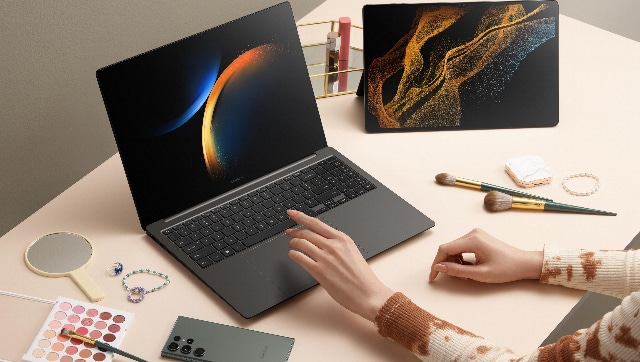
Although the Galaxy S23 series, especially the Galaxy S23 Ultra, was at the centre of everyone’s attention at the launch, Samsung also launched their new Galaxy Book3 series, their ultra-portable thin and light notebooks. The series includes three thin and lights, the Galaxy Book3 Ultra, the Galaxy Book3 Pro 360, and the Galaxy Book3 Pro.

Samsung Galaxy Book3 Series first impression_ More than the hardware, its the ecosystem that impresses

Specifications and hardware wide, they are everything that a thin and light note should be – a combination of stellar-looking design with the best hardware that is on the market right now. 

The notebooks are powered by Intel’s 13th Gen H-series processors and come with Intel’s Evo badging. The Galaxy Book3 Ultra, for example, is available with either an Intel 13th Gen i9 or an i7 CP, up to 32GB of LPDDR5 RAM and either an RTX 4070 or an RTX 4050 Laptop GPU, depending on how you spec it out.

Similarly, the other laptops get the best Intel 13th Gen i7 or i5 CPU with Intel Xe Graphics and up to 32GB of LPDDR5 RAM. All four devices get the best of PCIe storage of up to 1TB and you get a quad-speaker setup, tuned by AKG, that supports Dolby. Basically, you get all the bells and whistles that you would hope a top-tier laptop to have in 2023.

What sets the Galaxy Book3 series apart, is the suite of customisations, and features that Samsung has built into the laptop. Samsung wants to create an ecosystem of its own and boy, are they working hard on it.

Firstly, there’s Samsung’s Multi Control feature. Basically, this lets you type and control all your Samsung personal devices, like a smartphone or a tablet using the trackpad and the keyboard on your Galaxy Book3. Basically, you can reply to your messages, emails, and IM messages that you have received on your phone, using your laptop. Not just that you can also “share” stuff such as text and images between your devices, by simply copying it on one device, and pasting it somewhere else, using a completely different device.

Then there is Samsung’s own way to implement something as basic as a mobile hotspot. With Samsung’s Phone Link, you turn on the hotspot of your mobile device and connect it to your Galaxy Book3, all in just one click – no other step is required to set the system up. The best feature of Samsung’s Phone Link, however, is that it lets you continue browsing the internet from the same web page, even when you move between devices. For example, suppose you are reading a Wikipedia entry on your phone about something really quirky as you make your way up your apartment towards your home. You then sit down to start working on your laptop. Now, instead of having to look that Wikipedia entry up again, you can simply continue on your laptop.

Samsung Galaxy Book3 Series first impression_ More than the hardware, its the ecosystem that impresses (1)

Finally, there’s expert RAW auto share, a feature that will prove to be a boon for content creators, especially photographers. Now, users will be able to transfer RAW files from their Galaxy devices to their Galaxy Book3. What’s more is that users can then directly proceed to edit the images on their favourite software, straight away, without having to wait.

There are a bunch of other features and neat little tricks as well, that just work seamlessly between Samsung’s different personal devices. For example, you can share and extend your screen with other Galaxy devices, wireless, which allows you to use your Galaxy Tab as an additional display. 

Samsung has realised that what users want, is a seamless experience between multiple devices, and this is evident with what they have done with the Galaxy Book3 series. It will be interesting to see what other inter-device features they will be bringing next.


from Firstpost Tech Latest News https://ift.tt/sdnGMF2

Samsung Galaxy S23 Ultra first impressions: Familiar, and yet worlds apart

The launch of the Samsung Galaxy S23 series is a major event not just for Samsung, but the entire smartphone industry. Tech experts are usually divided on whether the introduction of the Galaxy Z Fold and the Galaxy Z Flip series, has meant that the Galaxy S series is no longer their flagship device. However, even they have to agree that the Galaxy S series, year after year sets the tone, and more often than not, the bar, against which flagships from all other manufacturers will be compared to.

Samsung Galaxy S23 Ultra first impressions Familiar, and yet worlds apart (1)

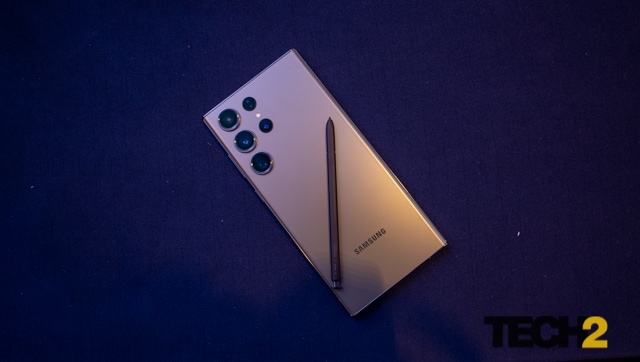
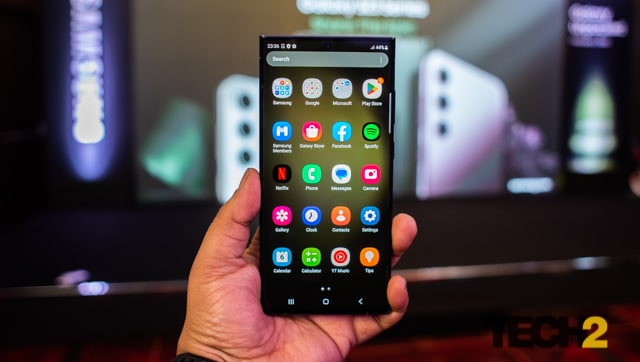
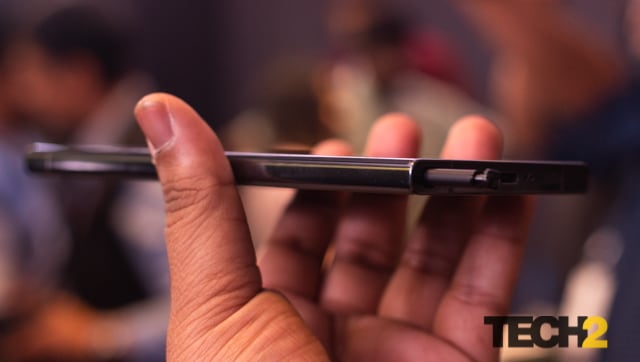
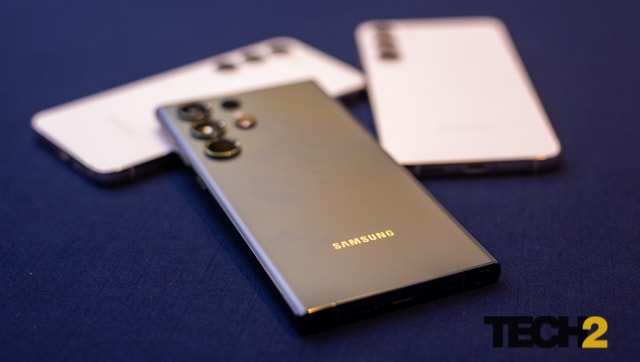
The S23 devices this year, looks identical to the S22 devices from the previous year. In fact, the Galaxy S23 Ultra, the true flagship from Samsung this year, looks and feels almost exactly the same as last year’s S22 Ultra. 

Look a bit closer though, and you’ll see that its a classic case of new wine in an old bottle. The S23 Ultra is not just a device that has been given an annual spec-refresh – it is so much more than that, especially in three key elements. Two of these three elements are benchmarks of what a flagship device ought to be. The third is an element, which we hope becomes an everlasting trend. 

Unrivalled Camera
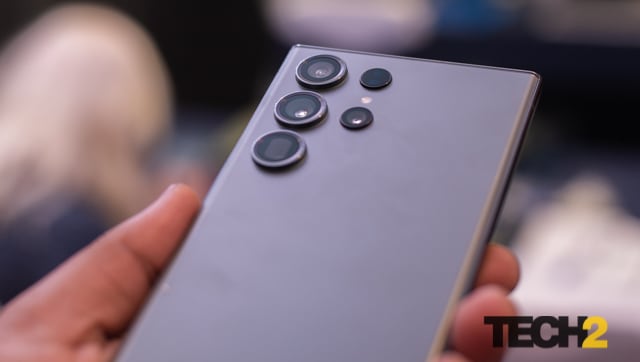
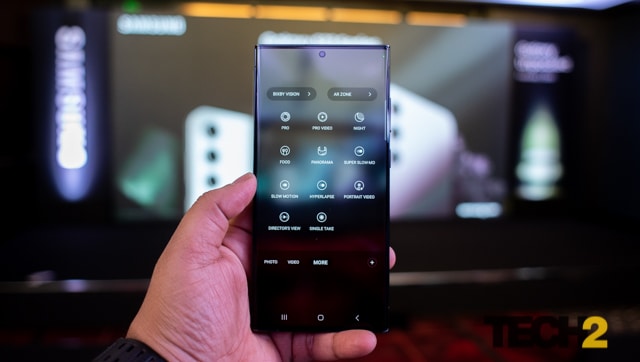
Say what you will, but it is very difficult to argue with the fact that the Galaxy S series has arguably the best smartphone camera across all budgets. The S23 Ultra gets the best possible sensor for its main camera, the 200MP ISOCELL HP2 sensor, that Samsung makes itself. While a 200MP sensor to take photos and videos seem impressive, what is actually bewildering is how Samsung has used these many pixels to enhance and sharpen the experience of taking photos and videos.

Samsung Galaxy S23 Ultra first impressions Familiar, and yet worlds apart (6)

For example, the main camera supports Super Quad Pixel Autofocus, which basically means it uses all the pixels in the sensor to focus on a subject. Smartphone cameras usually don’t do that. As a result, subject tracking is sensational on the S23 Ultra. Moreover, the autofocus feels much more faster than any other smartphone we have tried so far.

Apart from the main 200MP sensor, you also get an ultra-wide system with a 12MP sensor, a 10X telephoto system with a 10MP sensor, and a 3X telephoto system with a 10MP sensor. 

On the front, you have a 12MP unit, that for the first time ever, has HDR, along with Dual Pixel autofocus. And of course, you have portrait mode on the front-facing camera as well.

Samsung Galaxy S23 Ultra first impressions Familiar, and yet worlds apart (8)

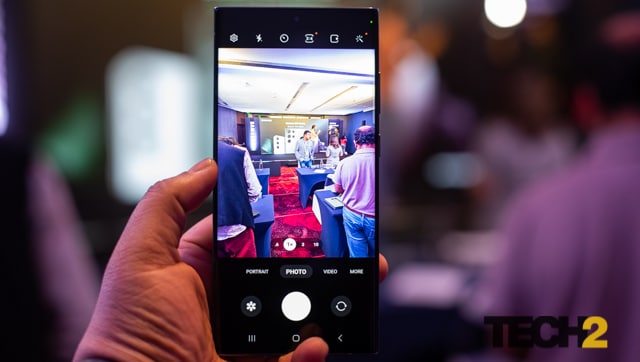
All of this hardware has allowed Samsung to experiment on software as well. The S23 Ultra gets a bunch of photography modes, but what really caught our eye, was the addition of Astro and Multiple Exposure mode. This is stuff that usually, you need a proper DSLR or a mirrorless camera from, and then too you will have to spend a bunch of time in some post-processing software like Lightroom or Photoshop to get the best results. Needless to say, this is a feature that we are eagerly waiting to test out.

Samsung Galaxy S23 Ultra first impressions Familiar, and yet worlds apart (4)

Furthermore, Samsung has also scaled up its OIS, and doubled it. That along with their Enhanced Noise control, means that photography and filmmaking in the dark, shouldn’t be a challenge anymore.

Unbridled Performance
Samsung says that with the S23 Ultra, they have a renewed focus on gaming. In fact they say that the S23 Ultra will provide users the ultimate gaming performance. Now that is a tall claim, but at least on paper, it seems that they have done everything they could to stand true to their claims.

First and foremost is the SoC. The Snapdragon 8 Gen 2 chipset is a rather capable SoC and performs very well in managing even the most demanding of tasks. Samsung, however, went on step further. In the S23 Ultra series, Samsung is using a variant of the Snapdragon 8 Gen 2 that has been specifically designed and tweaked for them.

Samsung Galaxy S23 Ultra first impressions Familiar, and yet worlds apart (5)

The new SoC brings a 34 per cent increase in CPU performance, a 41 per cent increase in GPU performance, and a staggering 49 per cent increase in Neural processing over the outgoing S22 Ultra. 

Furthermore, for the first time ever, we have Ray-Tracing on a smartphone. Samsung were actually very serious when they claimed that they want to take smartphone gaming as close to PC and console gaming, and they surely have tried. Again, this is a feature that we would love to test out thoroughly, provided a game publisher actually releases a game that has Ray Tracing enabled for a smartphone.

There are other enhancements as well. To ensure that the S23 Ultra delivers a reliable gaming performance consistently, Samsung has fitted the device with a vapour cooling chamber that is about 2.7 times larger than that of the S22 Ultra.

The S23 Ultra also gets a ton of software features that helps it perform better. You get AI-powered Adaptive performance that ensures that you get all that the Snapdragon SoC has to offer, and ensure a smooth and stable experience when playing hardcore and demanding games. 

You also get a ton of additional features that help you get the best out of your battery life. There’s the AI-Powered Adaptive Performance feature as well as Video Streaming Optimisation. What this basically does is that consuming content or videos on Google, YouTube, Insta and Facebook draws less power, which can boost battery life by upto 30 per cent.

Samsung Galaxy S23 Ultra first impressions Familiar, and yet worlds apart (7)

A touch of sustainability
This is where we feel we have to give Samsung some major props. Understanding why sustainability is important, and the need to recycle as much of our resources as we can, the entire exterior of the S23 Ultra, as well as the S23 and the S23 Plus, have been made using recycled materials, such as recycled aluminium, recycled glass and recycled PET. Even the S23 Ultra’s display, which is protected by Gorilla Glass Victus 2, uses recycled glass.

Everything else…
Everything else about the S23 Ultra and its siblings, the S23 and the S23 Plus, are what befits a flagship series in 2023. 

Samsung Galaxy S23 Ultra first impressions Familiar, and yet worlds apart (9)

The S23 Ultra comes with a 6.8-inch AMOLED display that supports a refresh rate 120Hz. In comparison, the S23 comes with a 6.1-inch 120Hz AMOLED display, and the S23 Plus has a 6.6-inch 120Hz AMOLED.

As for the battery, the S23 Ultra comes with a 5000 mAh unit, the S23 Plus is equipped with a 4700 mAh unit, and the S23 comes with a 3700 mAh unit. Barring the S23, all the devices support Samsung’s Super Fast Charging 2.0. 

We have already seen the cameras that the S23 Ultra gets. The S23 and The S23 Plus, both come with a 50MP main sensor, a 3X telephoto system with a 10MP sensor, and an ultrawide system with a 12MP sensor. Both devices get a 12MP front-facing camera.


from Firstpost Tech Latest News https://ift.tt/UyCsQ3e

Wednesday, September 7, 2022

Apple launches the iPhone 14 series starting at Rs 79,990, reveals Indian pricing for all newly launched devices.

Apple launched the iPhone 14 series and a whole bunch of new devices today, after many months of speculations and hype. Although the highlight of the event, clearly, were the new iPhone 14 Pro series, the other devices launched were groundbreaking for apple in their own right.

Apple-iPhone-14-iPhone-14-Plus-5up-hero-220907_Full-Bleed-Image

We take a look at all the major announcements from Apple’s Far Out event.

The iPhone 14 & iPhone 14 Plus
As anticipated the iPhone 14 comes in at 6.1-inches whereas the iPhone 14 Plus at 6.7-inches. The new iPhone 14 series, features an OLED Super Retina XDR display, that supports HDR, True Tone, and covers the wide P3 Colour gamut.

iPhone 14

Both the iPhone 14 and the iPhone 14 Plus get the A15 Bionic chip from the iPhone 13 series, but with slight improvements. This time, we get to see an A15 Bionic chip, with 6‑core CPU with 2 performance and 4 efficiency cores, a 5‑core GPU and a 16‑core Neural Engine.

For the cameras, we get a dual-camera system at the rear, with the main camera being a 12MP sensor, with a focal point of 26 mm, f/1.5 aperture, and sensor‑shift optical image stabilisation. The ultrawide camera is a 12MP sensor again, with 13 mm focal length, an f/2.4 aperture and 120° field of view.

The front-facing camera is a 12MP sensor with an f/1.9 aperture and has autofocus for the first time, thanks to Apple’s use of Focus Pixels.

As opposed to what the previous rumours had alluded to, the iPhone 14 & the iPhone 14 Plus do get satellite connectivity features. The new feature allows users to connect to an overhead satellite in cases of emergency and send out a distress signal, in the form of a text message, which needs to be selected from a list of predetermined texts.

The iPhone 14 has been priced at Rs 79,990 for the 128GB variant, Rs 89,990 for the 256GB variant and Rs 1,09,900 for the 512GB variant.

The iPhone 14 Plus, on the other hand has been priced at Rs 89,990 for the 128GB variant, Rs 99,990 for the 256GB variant and Rs 1,19,900 for the 512GB variant.

The iPhone 14 Pro & iPhone 14 Pro Max
The iPhone 14 Pro also comes in at 6.1-inches with the iPhone 14 Pro Max at 6.7-inches. The new iPhone 14 Pro series, features a ProMotion OLED Super Retina XDR display, that supports HDR, True Tone, and covers the wide P3 Colour gamut, and a dynamic refresh rate that refreshes between 1Hz and 120Hz.

iPhone 14 Pro

The biggest update to the iPhone 14 Pro series has been the new pill shaped notch, which Apple has named the Dynamic Island. The dynamic island notch adapts based on the activity that is going on or the app that is being used. For instance, when the music app is open, the notch will display a different kind of animation.

Both the iPhone 14 Pro and the iPhone 14 Pro Max get a new A16 Bionic chip with 6‑core CPU with 2 performance and 4 efficiency cores, a 5‑core GPU and a 16‑core Neural Engine that

For the cameras, we get a triple-camera system at the rear, with the main camera being a 48MP sensor, with a focal point of 24 mm, f/1.8 aperture, and sensor‑shift optical image stabilisation. The ultrawide camera is a 12MP sensor, with 13 mm focal length, an f/2.2 aperture and 120° field of view. The 12MP Telephoto camera has 3X zoom, at a focal length of 77 mm, an f/2.8 aperture, and optical image stabilisation.

The front-facing camera is a 12MP sensor with an f/1.9 aperture and also gets autofocus

The iPhone 14 Pro and the iPhone 14 Pro Max also get satellite connectivity features. For both, the iPhone 14 Series and the iPhone 14 Pro series, the functionality is currently limited only to the US and Canada, and will start functioning after an update in November. It remains to be seen if this feature will be made available in India.

The iPhone 14 Pro has been priced at Rs 1,29,990 for the 128GB variant, Rs 1,39,990 for the 256GB variant, Rs 1,59,990 for the 512GB variant and Rs 1,79,990 for the 1TB varaint.

The iPhone 14 Pro has been priced at Rs 1,39,990 for the 128GB variant, Rs 1,49,990 for the 256GB variant, Rs 1,69,990 for the 512GB variant and Rs 1,89,990 for the 1TB varaint.

The Apple Watches
Apple announced three new watches today, the Apple Watch Series 8, the Apple Watch SE and the Apple Watch Ultra.

Apple Watch Ultra

The main focus of the Apple Watch Series 8 was to improve over the health services and observations it provides, like temperature monitoring and ovulation tracking. It also gets a new array of motion sensors that allows it to detect car crashes and send out distress signals to emergency services. The Apple Watch Series 8 comes with 18-hour battery life, which can be extended to up to 36 hours Apple claims thanks to a new low-power mode.

Apple Watch SE second-gen has the same chip as Series 8, crash detection feature and more. The new Apple Watch SE Gen 2 comes with a 30 per cent larger display and internals that Apple claims make the watch 20 per cent faster. The Apple Watch SE also comes with crash detection, a number of colour variants and more.

Apple also introduced a new Apple Watch Ultra, their most rugged, biggest and toughest Apple Watch yet. Apple Watch Ultra gets a 49mm titanium case and flat sapphire front crystal that reveals the biggest and brightest Apple Watch display yet. Apple Watch Ultra also has the best battery life of any Apple Watch, reaching up to 36 hours during normal use. Additionally, a new low-power setting, ideal for multi-day experiences, can extend battery life to reach up to 60 hours

The Apple Watch Series 8 Apple Watch Series 8 starts at Rs 5900 and Apple Watch SE starts at Rs 29900 for the GPS-only models. The Apple Watch Ultra on the other hand is priced at Rs 89,900 for all generations.

The AirPods Pro
The second-gen AirPods Pro or the AirPods Pro 2, are the most advanced AirPods ever, thanks to the new H2 chip.

Apple AirPods Pro 2

The new H2 chip offers a much better acoustic experience and cancels up to twice as much noise as the previous generation AirPods Pro, claims Apple. It also gets a new low-distortion audio driver and custom amplifier which Apple claims gives it richer bass and much more crystal-clear sound across a wider range of frequencies.
As for battery life, the AirPods Pro 2 gets about 6 hours with ANC enabled and up to 30 hours from the case. As for the price, the AirPods Pro 2 will be available for Rs 26900


from Firstpost Tech Latest News https://ift.tt/9ZutLfG

Thursday, May 12, 2022

Android 13 unveiled at Google I/O 2022, has all new features like Google Wallet, RCS Chat and more

Among the unveiling of the new line of Pixel devices such as the Pixel 7, Pixel 6a and Pixel Buds Pro, Google also showcased the next generation of mobile operating system that will be powering those devices at the I/O developer’s conference - Android 13.

Android 13 Beta 2 launched check new features

Google has stated that the new OS has a much deeper focus on privacy, security and personalisation, and has a hoard of new applications and features that reflect the same.

Google is keen on building an ecosystem of its own, something that could take on Apple’s ecosystem. The tech giant believes that in order for that to happen, Android 13 will have to play a pivotal role, by building a more connected space for all Android based devices. The company revealed that the number of activations of Android phones exceeded 1 billion in the last year, with over 3 billion monthly active Android devices. This, coupled with the fact that a number of popular smartphone manufacturers are promising 4 years of continuous updates means that Google will now have to support a wide array of devices, as well as tablets. In such a scenario, security, privacy and customisability become a huge issue. 

Android 13 Beta 2 launched check new features

We take a look at some of the features that we will see in Android 13.

A Revamped Google Wallet

Users will now be able to store digital versions of documents including debit or credit cards, vaccine records, government issued documents and even digital car keys, if the car in question uses a sensor based key. Google Wallet was first introduced in 2011 but it failed to take off back then. Google now believes with a wider and better array of support and features, it will be more viable in 2022. For this, Google intends to integrate Google Wallet along with other apps for faster and more seamless transactions. 

RCS Chat

RCS or Rich Communication Service chat is a system that brings a wide range of features to a standard SMS. Think of it like iMessage or WhatsApp, but being operated through the SMS or Chat app. This brings a wide range of features to SMS including support for photos, messaging over WiFi, group messaging and typing indicators (to let you know when someone is typing). Google is also working on end-to-end encryption for group messages and expects to roll it out by the end of the year. It already provides encryption for one-on-one conversations

Personalisation features

Google is going big with customisation and personalisation. One of the biggest new features is the support of multiple languages that will allow users to use one app in one language and a different app in a different language. Users now will have to opt-in for app notifications. This basically means apps do not have the permission to show notifications by default, and users can only select the apps they want to see notifications from. Until now, users had to disable notifications from apps they felt were intrusive. 

There are a number of other little tweaks as well. Apps, for example, can now incorporate the colour from the theme or the wallpaper that you have chosen. Furthermore, the media tool kit now changes its appearance depending on the type of music you’re listening to.

Android 13 Beta 2 launched check new features

Safety Features

Google also announced ELS or Emergency Location Services, which helps emergency workers to easily locate a user, after they send an SOS alert. The emergency feature which was included in Android 12, will now be extended to WearOS with Android 13.

Google had also tested and launched an early earthquake warning feature in 25 countries. The tech giant will now launch this feature in other high-risk countries. The way the system works is that it uses a device’s accelerometer to detect if there’s an earthquake taking place. It then shares the information across the region, before shockwaves reach other areas.

The final version of Android 13 will start rolling out later this year.


from Firstpost Tech Latest News https://ift.tt/gSptzjy

Wednesday, March 30, 2022

Swapping for a cleaner future

by Pawan Mulukutla

Leveraging the impetus for electric vehicle (EV) adoption in the country, the Centre announced its intention of drafting a battery swapping policy to further accelerate the uptake of cleaner vehicles in February. When presenting the Union Budget for the year 2022-23, Finance Minister Nirmala Sitharaman encouraged private players to develop sustainable and innovative business models for 'Battery or Energy as a Service'.

The initial hurdles faced by the EV sector were smoothened through schemes and policies such as Faster Adoption and Manufacturing of (Hybrid and) Electric vehicles in India (FAME) and several other initiatives by state governments. These have helped ensure that the EV sector continues to grow, despite the global lockdown putting brakes across industries. With encouraging signs, India has committed to ensuring that 30% of vehicle sales are electric by the end of the decade.

Any conversation around EVs quickly turns to technological and logistical hurdles in re-energizing their battery packs. This can be done in two ways: setting up charging points in private and public spaces, and installing battery swapping booths. While the former requires more land and higher capacity charging equipment, the latter does not. The convenience of battery swapping is akin to that of fuel refilling, as the battery in the EV can be swapped with a fully charged battery as quickly as refuelling an internal combustion engine vehicle.

Charging stations are often equipped with direct current (DC) fast chargers using to minimize the waiting period for the consumer. This has a few downsides. Fast charging lowers the battery's charging cycles, especially in an uncontrolled environment, exposed to the vagaries of India's weather conditions. They also require more space, a scarcity in urban areas, to accommodate vehicles as they charge. Even the fastest chargers take at least half an hour for scooters. Another disadvantage with fast charging stations is their high power demand which burdens the electricity grid. Increasing the capacity of substations and their density is a capital-intensive process. Moreover, high power charging stations can destabilize comparatively low power residential grids owing to the voltage fluctutations that EV charging can cause, thereby making there deployment less than ideal for residential areas.

On the other hand, charging points could be cheaper to set up if land costs are excluded. Battery swapping stations can also stack multiple batteries on top of each other, further reducing land requirements. This allows swapping stations to be built within fuel stations as well.

Battery swapping stations, while requiring lesser land, have to pay the price of having more batteries than on-road EVs to ensure constant availability. This is a cost that needs to be borne by fleet operators in the commercial segment. Soon after the Union Budget called for private players to invest in battery swapping, several business leaders lent their support. Some also asked subsidies for 'floating' batteries or extra batteries required for battery swapping logistics, something the current FAME scheme does not support. For their part, private players need to come together and ensure cross-compatibility of batteries and EVs to ensure the infrastructure built is used to its full potential.

Operators also prefer investing in battery swapping stations rather than fast charging points as the former gives more control in maintaining electricity demand and supply. For example, local discom agencies are promoting a 'Time-of-Day' (ToD) tariff regime according to the power demand profile for the service area of the discom. ToD also helps stagger the demand across the day, thereby keeping it below the substation's capacity providing the energy. On the other hand, fast charging requires expensive infrastructure and high capacity substations to meet its energy demands. Battery swapping also allows operators to charge batteries separately from the swapping station. This gives them more flexibility in setting up swapping stations in an urban area.

For battery-swapping stations to become financially sustainable, standardization of battery and terminal points plays a significant role. However, with the competition heating up to capture the nascent market at the earliest, vehicle manufacturers are investing a significant portion of their resources in researching and developing more sophisticated batteries.

The Centre has already taken the first steps towards this end goal. In August 2020, the Union Ministry of Road Transport and Highways (MORTH) allowed EVs to be sold without pre-fitted batteries. This drastically reduces the price of the vehicle (batteries can make up to 50% of an EVs cost) while giving the consumer the freedom to lease batteries without having to worry about its long-term maintenance and associated costs. It also allows consumers to use battery swapping stations and the option of detaching batteries to charge them at home. While a controlled charging environment helps increase battery life, the consumer also stands to benefit by keeping up with the rapidly developing battery technologies. In current times, most electric vehicles come fitted with Lithium-ion batteries, but they are expected to be replaced with Lithium-graphene, which have higher capacities while being smaller in size.

For individuals who do not have access to charging points at their residence or workspaces, battery swapping points is a welcome convenience. Also, for commercial operators – especially those performing last-mile deliveries as battery swapping allows for minimum downtime for their vehicles. Having a fully charged battery in the vehicle in two to five minutes is a major advantage of battery swapping.

Around the world, especially in the global north, battery charging points have gained significant traction compared to swapping stations. This is mainly because EVs in western countries are either cars for personal use or buses in commercial operations. Swapping is not a convenient option for heavier vehicles as it requires the heavy lifting of bigger batteries. However, the situation in India is very different – nearly 70% of vehicles on the roads are two-wheelers. Commercial operations of two-wheelers have also seen a marked increase, especially since the pandemic-induced lockdowns. And batteries that are found in electric two-wheelers can easily be swapped manually, owing to low weight. As automated battery swapping infrastructure is not required for moving two-wheeler batteries, there exists significant potential in the segment as far as battery swapping goes.

WRI India's analysis shows the total cost of operation of electric two-wheelers for commercial operators reaches parity with petrol bikes within a year of usage, without using FAME subsidies. Sensing the market for this, electric two-wheeler manufacturers, operators and aggregators have already begun collaborating with e-commerce, cloud kitchens, and grocery shops to reduce the cost of hyperlocal deliveries. In addition, one vehicle manufacturer recently announced their commitment to battery swapping stations, even for personal use. Given the segment's high usage and lack of time to charge their batteries, a dense battery-swapping network in urban areas would go a long way to accelerate the EV sector.

Disclaimer: Pawan Mulukutla is the director for energy technology and green mobility at World Resources Institute India. Views expressed are personal.


from Firstpost Tech Latest News https://ift.tt/nUsDGZP

Sunday, March 13, 2022

Stephen Hawking death anniversary: Here are some of his groundbreaking theories

British physicist Stephen Hawking passed away on this day, 14 March, in the year 2018. His death at the age of 76 left his admirers, as well as people in the scientific community, in deep shock.

Hawking, who battled amyotrophic lateral sclerosis (ALS) for over five decades, was told he had less than three years to live when he was first diagnosed. However, he did not let the disease stop him from becoming an icon in the scientific community.

The physicist connected quantum mechanics (which focuses on how electrons and positrons work) with the theory of relativity, according to The Verge. This remains one of his biggest achievements.

Hawking’s book A Brief History of Time, was an international bestseller and remains influential since it was first published in the 1980s. The book was much-loved among readers for simplifying complex theories related to the origin of the universe, black holes and other topics.

Apart from immense contributions to physics, Hawking was also a pop culture icon and made appearances in several shows including The Big Bang Theory and The Simpsons.

Stephen Hawking’s contribution to the scientific community, will always remain valuable. On his death anniversary, here are some of his ground-breaking theories:

  • In the 1960s, Hawking, along with Roger Penrose, applied Albert Einstein’s theory of relativity to the origin of the cosmos. The theory implied that space and time began with the Big Bang, and would end with black holes.
  • According to Hawking, if the universe began from a singularity or a just one infinitely small point, questions about what was before the Big Bang, were useless.
  • He also gave more solid mathematical backing to the idea of black holes, which  had first been theorised by Albert Einstein in 1916.
  • Hawking also demonstrated that black holes actually emit radiation. The phenomenon was later named the Hawking radiation in his honour. The physicist also discovered that black holes can explode and die. His ideas also led to the discovery that black holes were not actually black , but “white-hot”.
  • Hawking theorised that the event horizons of black holes, “the boundary beyond which nothing can ever escape", could never shrink. This was later known Hawking’s area theorem. In 2021, physicists at the Massachusetts Institute of Technology confirmed the theory.
  • Hawking also postulated that when a star dies, its mass collapses into a singularity, which then leads to the formation of a black hole.

His work has made black holes more understandable to both the scientific community and the general public.
Read all the Latest News, Trending News, Cricket News, Bollywood News,
India News and Entertainment News here. Follow us on Facebook, Twitter and Instagram.


from Firstpost Tech Latest News https://ift.tt/dAHtxsJ

Thursday, March 10, 2022

Best phones under Rs 40,000 (Mar 2022): OnePlus 9R, Motorola Edge 20 Pro to Samsung Galaxy S20 FE

Three months have passed since we compiled our previous list of phones under Rs 40,000 in India, and most of the handsets we chose then are still making a strong case for inclusion in this one. Choosing just five smartphones in this price band still remains a tough ask. So we chose seven this time. We have handsets with flagship grade processors, ample RAM and storage, 5G compliance, high refresh rate AMOLED displays and of course excellent cameras. Let’s see who made the cut this quarter.

Best phones to buy under Rs 40,000 in India

Xiaomi Mi 11X Pro 5G

Xiaomi’s Mi 11X Pro 5G comfortably retains its spot, and is now available for an even better price. It is powered by Qualcomm’s flagship Snapdragon 888 SoC. You get 8 GB RAM and a choice between 128 GB and 256 GB of internal storage to go with it. A 108MP camera at the back captures some impressive shots in different modes and lighting. It is accompanied by an 8MP ultra-wide snapper and a 5MP macro camera. A 20MP front camera handles selfies and video calls quite well.

1626681341_19XiaomiMi11XPro (1)

Its sharp display is one of the standout features of this phone. You get a 6.67-inch Super AMOLED Full HD+ display with 120 Hz refresh rate, HDR10+ compliance and a peak brightness of 1300 nits. The screen is protected against scratches by a layer of Corning Gorilla Glass 5 and so is the phone’s glass back. A 4520 mAh battery keeps it running for over a day of moderate use, and the bundled 33 W fast charger can charge it fully in under an hour. Mi 11X Pro runs Android 11 with MIUI 12 on top.

Xiaomi Mi 11X Pro 5G price in India: Rs 32,990 for 8 GB RAM/ 128 GB storage; Rs 37,490 for 8 GB RAM/ 256 GB storage

OnePlus 9R

The OnePlus 9R remains a great all-round player in this segment, and Amazon India is currently offering additional Rs 3,000 off on the phone to sweeten the deal. You can get its 8 GB RAM and 128 GB storage variant under 37K. The phone has a 6.55-inch Full HD+ Fluid AMOLED display with 120 Hz refresh rate and HDR10+ compliance. The metal frame and glass body protected by Corning Gorilla Glass 5 makes it look elegant. The phone runs OxygenOS 11 based on Android 11, which is still one of the better Android UI around.

1624939836_OnePlus9R_back (1)

You get four cameras at the back consisting of a 48MP primary camera with optical image stabilisation (OIS), 16MP ultrawide shooter, 5MP macro camera and a 2MP mono camera. The cameras manage to capture crisp images in different lighting and modes. A 16MP selfie camera is located in a tiny punch-hole at the top of the screen. The OnePlus 9R is powered by Qualcomm’s Snapdragon 870 chip. A 4500 mAh battery keeps the phone powered for over a day of moderate use, and the bundled 65W Warp charger juices it up in just around 40 minutes.

OnePlus 9R price in India: Rs 36,999 effectively for 8 GB RAM/ 128 GB storage

Motorola Edge 20 Pro

The lesser known Motorola Edge 20 Pro is another mighty impressive option in this budget that offers some unique features. This phone too is powered by a Snapdragon 870 chip and comes with 8 GB RAM and 128 GB internal storage. Its large 6.7-inch Full HD+ OLED display flaunts a 144 Hz refresh rate along with HDR10+ compliance and capability to display over a billion colour shades. There is Corning Gorilla Glass 5 protection against scratches at the front and back.

motorola-edge-20-pro (1)

The star of the photography department on the Motorola Edge 20 Pro is a 108MP primary camera with quite an impressive support cast. You get a 16MP ultra-wide camera and an 8MP telephoto camera with OIS that gives you 5X optical zoom. Not to forget the 32MP front camera that is bound to impress the selfie crowd. Its 4500 mAh battery lasts for over a day of moderate use and supports 30W fast charging. This phone runs Android 11, and like most Motorola phones, you get a clean and near-stock user interface.

Motorola Edge 20 Pro price in India: Rs 32,999 for 8 GB RAM/ 128 GB storage

iQOO 7 5G/ iQOO 7 Legend 5G/ Vivo X60

Two handsets from Vivo’s sub-brand feature in this list along with one from the parent company itself. The iQOO 7 5G is powered by a Qualcomm Snapdragon 870 chip, and you get the 8 GB RAM and 256 GB internal storage variant in this budget. Its 6.62-inch HDR10+ compliant Full HD+ AMOLED display has a 120 Hz refresh rate for smooth scrolling in compatible apps. The rear camera department comprises a 48MP primary camera with OIS. Giving it company are a 13MP ultra-wide camera and a 2MP depth sensor.

IQOO-7-5G (1)

If you need more processing power and a few extra features for a 7K premium, and are willing to sacrifice half the internal storage, you can opt for the 8 GB RAM and 128 GB storage variant of the iQOO 7 Legend. It has a more powerful Snapdragon 888 SoC and also comes with a 13MP telephoto camera that gives you 2X optical zoom. Both phones run Android 11 with FunTouch OS 11, and one can expect two more major Android updates in the future for these devices.

vivo-x60-twitter (1)

We are not done yet. Let me present another scenario. If you are fine with a Snapdragon 870 chip but want the rear camera department of the Legend, you should strongly consider the Vivo X60 for a good Rs 5,000 less than the iQOO 7 Legend. The phone is a lot more slim and stylish too, and boasts of Zeiss optics for its cameras.

iQOO 7 5G price in India: Rs 32,990 for 8 GB RAM/ 256 GB storage
iQOO 7 Legend 5G price in India: Rs 39,990 for 8 GB RAM/ 128 GB storage
Vivo X60 price in India: Rs 34,990 for 8 GB RAM/ 128 GB storage

Samsung Galaxy S20 FE 5G

Samsung Galaxy S20 FE 5G is now available in this budget. This phone has a 6.5-inch Super AMOLED display with 120 Hz refresh rate and is HDR10+ compliant. This stylish handset has an IP68 rated ingress protection. It is powered by Qualcomm’s previous generation flagship chip, Snapdragon 865. You get 8 GB RAM and 128 GB internal storage to go with it. The internal storage can be expanded further using a microSD card; a rare feature in premium phones these days. The phone runs Android 11 with Samsung’s One UI 3.1.

Samsung-Galaxy-S20-FE-review_-7 (1)

Photography department is quite versatile and consists of a 12MP primary camera with dual-pixel PDAF and OIS, a 12MP ultra-wide camera and an 8MP telephoto camera with OIS for up to 3X optical zoom. Given that it’s a Samsung S series phone, the camera quality is excellent across different modes. You also have a 32MP camera at the front to please the selfie enthusiasts. Its 4500 mAh battery lasts for well over a day of moderate use. It doesn’t just support regular fast charging but also fast wireless charging.

Samsung Galaxy S20 FE price in India: Rs 36,990 for 8 GB RAM/ 128 GB storage

Read all the Latest News, Trending News, Cricket News, Bollywood News, India News and Entertainment News here. Follow us on Facebook, Twitter and Instagram.


from Firstpost Tech Latest News https://ift.tt/HndTqFg

Thursday, February 10, 2022

ESA posts incredible pictures of ice-rich impact crater on Mars; check details here

The European Space Agency (ESA) recently shared unbelievable photos of a crater on Mars on their official Instagram page. ESA is known to often share such mesmerising photos on its handle.

This time, the agency gave people a peek into an ice-rich impact crater on Mars. The picture was captured on 13 June last year in the vast northern plains of Acidalia Planitia.

In the post shared, ESA mentioned that the crater could easily be mistaken for a tree stump but was in fact a birds-eye view into an ice-rich impact crater on the red planet. The crater’s interior is filled with water-ice rich deposits. “This crater got excited with its rings”, read the caption of ESA’s Instagram post.

It is thought that the deposits were of a time when the red planet’s spin axis allowed water-ice deposits to form at lower latitudes, unlike it does today. Mars also tilts just like the Earth and its tilt gives rise to seasons too. However, Mars has experienced dramatic change in its tilt over a long period of time.

Furthermore, ESA revealed that the crater deposits found on Mars have quasi-circular and polygonal patterns of fracture which reveal details of the red planet’s history. The feature of fractured patterns is said to have been produced due to seasonal changes in temperature which lead to expansion and contraction of ice-rich material.

Take a look at the incredible images here:


These images from ESA were shared as part of the European-led ExoMars programme. European Space Agency and Russian space agency Roscosmos collaborated to send a spacecraft called Trace Gas Orbiter (TGO) to Mars in 2016 and began its full science mission in 2018. The ExoMars Trace Gas Orbiter mission aims to understand the presence of methane and other atmospheric gases that could be present on Mars and may be an evidence for possible biological or geological activity.

TGO is returning spectacular images from the red planet and is also mapping the planet’s surface for water-rich locations. The ExoMars mission also aims at understanding the history of water on Mars. Data provided through the ongoing mission will further help in the second ExoMars mission.

After the post was shared on social media, internet users were amazed by the spectacular pictures. The post gained nearly 17,740 likes on Instagram and prompted a number of comments from excited users.

An Instagram user wrote, “I love you European Space Agency”, while another loved the images so much that they put up a request to download them by writing, “Can we have it full resolution to download, please?”.

What are your thoughts on ESA’s incredible pictures from Mars?

Read all the Latest News, Trending News, Cricket News, Bollywood News,
India News and Entertainment News here. Follow us on Facebook, Twitter and Instagram.


from Firstpost Tech Latest News https://ift.tt/qF7byk6

Thursday, December 30, 2021

New Year’s Eve: How to download, send and manage stickers on WhatsApp

New Year is just around the corner and people are all set to say goodbye to 2021. New Year’s Eve is not just the time to plan the perfect party or dinner, it is also a day to convey your best wishes for the upcoming year to everyone who matters to you.

As 2022 approaches, people are geared to celebrate the occasion as best as they can, amid the recent uptick in coronavirus cases. From scaled-down celebrations at home to a simple family dinner, people are trying their best to modify their plans according to the latest COVID-19 norms.

While the ongoing pandemic has led many people to opt for a low-key celebration at home, many are eager to convey the season’s greetings to their loved ones.

As the year ends, people are finding the perfect wishes and New Year’s greetings to send to their close family and friends. One fun way to send New Year greetings is through stickers on Whatsapp. As the medium to exchange greetings becomes more and more popular, here is a guide to download and share stickers for New Year 2022:

―    Go to the Google Play Store app and type WhatsApp stickers in the search bar
―    Google Play will display various sticker options for the occasion
―    Select any app you prefer, after looking at the animation and customisation features of the options
―    Download the selected app and check if the stickers are working fine
―    Open Whatsapp and go to a personal chat or group
―    Press the emoji option to select the sticker tab
―    Here you will see the sticker packs you had downloaded earlier
―    Tap the sticker pack header to open the pack and scroll down to select some stickers
―    Tap the stickers to send them to close family and friends

You can also use this process to send out stickers for other festivals as well.


from Firstpost Tech Latest News https://ift.tt/3mKv87I

Tuesday, December 28, 2021

Realme Pad Review: A fun tablet for content consumption, not creation

Rating: 4/5 

Price: Rs 17,999

A couple of years ago, it seemed like tablets were a dying breed. But the pandemic induced work/study/enjoy from home culture seems to have brought about a resurgence in the category. Many consider tablets as an alternative for laptops for attending online lectures. Some find it better for group video calls due to the larger screen real estate. And they have always served as an extra screen at home for personal entertainment. 

Popular smartphone brand, Realme has entered the budget tablet segment with their product that promises to offer more than what the incumbents do in the sub-Rs 20,000 segment. The Realme Pad does look impressive on paper. Time to figure out what’s good about it, what’s not and if it indeed is one of the best options in this budget.

The Realme Pad. Image Courtesy: realme.com

Realme Pad: Design

Though this is a budget tablet, the design has more than a hint of style. The champagne gold aluminium frame and back looks elegant, and the tablet is less than 7 mm slim; probably slimmer than all Realme phones if my memory serves me right. You also get a metallic grey colour in this. It weighs about 440 grams but doesn’t feel too heavy in hand. If there is one thing I would change about the design, it would be the bezels; they could have been thinner than they are, and yet let you grip the tablet from the sides comfortably.

The champagne gold aluminium frame and back look elegant, and the tablet is less than 7 mm slim; probably slimmer than all Realme phone

The Realme Pad is meant to be used in landscape mode more than portrait. The company hints at the same by placing the front camera at the centre of the longer edge of the tablet. You get a power button, volume rocker, a SIM/microSD card tray, USB-C port and a couple of microphones along the edges in addition to a couple of speakers each on either side of the screen (when in landscape mode). An 8MP camera is located at the back of the tablet.

Realme Pad: Display

The Realme Pad has a 10.4-inch 8-bit WUXGA+ display with a resolution of 2000 x 1200 pixels. Simply put, a screen with a slightly higher resolution than Full HD and capable of displaying 16.7 million colour shades, which is very good for a budget tablet. I believe it uses an IPS panel and the viewing angles are quite good. It has a standard 60 Hz refresh rate, and scrolling feels just a little stuttery, or maybe I am spoiled by 90 Hz and 120 Hz refresh rate displays on phones over the past year or so.

The Realme Pad has a 10.4-inch 8-bit WUXGA+ display with a resolution of 2000 x 1200 pixels.

The screen has a rated brightness of 360 nits, and it is bright enough indoors and can get just about sufficiently bright when outdoors. The contrast is impressive and so is the colour reproduction. Though it doesn’t support HDR, the colours feel vibrant without going over the top. It is compliant with Widevine L1, meaning you can watch Full HD content on OTT platforms like Netflix on this tablet. The screen is protected by some kind of scratch resistant glass (brand not specified), but it surely doesn’t have oleophobic coating, and attracts a lot of smudge marks. You need to keep wiping it from time to time.

It is compliant with Widevine L1, meaning you can watch Full HD content on OTT platforms like Netflix on this tablet

Realme Pad: Specifications and key features

The Realme Pad is powered by a Mediatek Helio G80 SoC with Mali-G52 MC2 GPU and you get options of either 3 GB RAM with 32 GB internal storage or 4 GB RAM with 64 GB storage. You can expand it further up to 1 TB using a microSD card, which is a good option to have. You get either a WiFi only variant (3 GB/ 32 GB) of this tablet or WiFi + LTE variant with a 4G SIM slot for calling and mobile data. We got the latter for review with 64 GB storage. Wireless connectivity options include Bluetooth 5.0 and dual-band WiFi with support for 2.4 GHz and 5 GHz networks.

The tablet has two 8MP cameras, one at the front and the other at the back. The rear camera is just there for basic usage and not for serious photography. The front camera has an ultra-wide lens with a 105 degrees FOV that is handy for video calls. As I mentioned earlier, the quad speakers on the Realme Pad are Dolby Atmos compliant and the output is surprisingly loud and punchy at near peak volume. One thing I missed here is a fingerprint scanner to unlock the screen. I still prefer it over face unlock or passcodes/patterns. I am not sure too many tablets in this segment have it though.

Realme Pad: Software and UI

This tablet runs Android 11 with Realme UI for Pad. The UI here is far closer to stock Android than Realme UI that you get on their phones. Either way, that’s not a bad thing. The UI is clean, smooth and pretty much free of bloatware. In fact, most of the preinstalled apps are Google services barring Facebook maybe. Given the distinct possibility of this tablet being used by children, you also have a couple of kid friendly apps like Kids Space and YT Kids. You can choose who (adults or children) would be using the tablet during setup, and it gets configured accordingly.

The UI is clean, smooth and free of bloatware

Realme Pad: Performance

The general performance of this tablet is perfectly fine. The G80 processor is powerful enough for day to day tasks like browsing, watching videos, video calls or listening to music. Things tend to get slightly sluggish if you open too many apps at the same time, but that has more to do with the limited amount of RAM. Also, do not get carried away with the mention of Helio G80 as a gaming processor on this tablet’s listing page. While it can handle some casual or less graphics intensive games with ease, don’t expect games like Asphalt 9 to run smoothly at high visual settings.

Typing out articles on a tablet is not my thing, and it isn’t very comfortable on the Realme Pad either. There is no keyboard accessory for this tablet that Realme has announced. In fact, I don’t think there are any accessories made available by the company yet. There is no cover bundled along either. This tablet isn’t ideal for content creation or using productivity apps. But when it comes to content consumption, this product is a great option.

Watching content on Netflix or Prime Video on this tablet was an enjoyable experience. While you can always use Bluetooth headphones with it, I often found myself watching videos without the earphones. The four speakers present here do a terrific job most of the time when you push the volume closer to 90 percent or beyond, and Dolby Atmos compliance lends it a broader soundstage than what you expect from built-in speakers on a tablet. Since this is an Android tablet, you have the option of casting the content to larger screens of compatible TVs.

The four speakers and Dolby Atmos compliance lends it a broader soundstage than what you expect from built-in speakers on a tablet

Browsing the internet or reading e-books is also a smooth experience here. The screen offers multiple viewing modes for different lighting and activities. You get reading mode, night mode, dark more and sunlight mode. While it doesn’t transform the screen into a Kindle, the first two modes are a lot easier on the eyes when reading in a dimly lit environment. Video calls are handled well too, and the larger screen gives you a lot more breathing space for group calls with multiple participants.

While the front camera is good enough for video calls, the rear camera is nothing great. It is there only for basic use, if you need to capture something urgently on the tablet, and not as an alternative for your phone camera. The LTE variants of the Realme Pad let you add a 4G SIM and make voice calls. It doesn’t have an earpiece like phones but the built-in microphones and speakers manage calls surprisingly well. You can always use a Bluetooth headset for better call quality or more privacy.

Realme Pad: Battery life

The Realme Pad has a 7100 mAh battery that kept it powered for about two days of moderate use during testing that included a couple of hours of watching content on Netflix, two hours of browsing and reading e-books and 30 minutes of video calling daily. That’s a pretty decent battery backup. It supports 18W fast charging and the bundled charger takes close to 3 hours to charge it fully, which is not so great. The tablet supports reverse charging and can be used as a powerbank to charge other devices.

Realme Pad: Price and verdict

The Realme Pad is available for purchase for Rs 13,999 for the WiFi only variant with 3 GB RAM and 32 GB storage, going all the way up to Rs 17,999 for the WiFi + LTE variant with 4 GB RAM and 64 GB storage. The pricing is pretty decent given that the competition, mainly from Samsung and Lenovo, has nothing significantly better to offer under Rs 20,000. This may not necessarily be a category defining product, but is a well-rounded tablet that is great for media consumption, reading and video-calling, runs a more recent version of Android, provides decent battery backup and is worth the asking price.

Read all the Latest News, Trending News, Cricket News, Bollywood News,
India News and Entertainment News here. Follow us on Facebook, Twitter and Instagram.


from Firstpost Tech Latest News https://ift.tt/3z97vuU

Tuesday, December 21, 2021

James Webb Space Telescope: Why it's a big deal, how it works, and what happens next

The James Webb Space Telescope is a time-traveling wonder capable of peering back to within a hair’s breadth of the dawn of the universe. And it’s finally on the brink of flight.

But what do we know about the successor to the Hubble Space Telescope?  Let's take a brief look:

What's the big deal?

The James Webb Space Telescope will be the biggest and most powerful astronomical observatory ever to leave the planet, elaborate in its design and ambitious in its scope.

The Webb telescope is so big that it had to be folded origami-style to fit into the nose cone of the European Ariane rocket for lift-off from the coast of French Guiana in South America. Its light-collecting mirror is the size of several parking spots and its sunshade the size of a tennis court. Everything needs to be unfolded once the spacecraft is speeding toward its perch 1 million miles (1.6 million kilometres) away.

Named after the man who led NASA during the space-trailblazing 1960s, the seven-ton James Webb Space Telescope is 100 times more powerful than Hubble.

The 31-year-old Hubble — increasingly creaky but still churning out celestial glamour shots — focuses on visible and ultraviolet light, with just a smattering of infrared light.

As an infrared or heat-sensing telescope, Webb will see things Hubble can’t, providing “an entirely new perspective on the universe that will be just as awe-inspiring,” said Nikole Lewis, deputy director of Cornell University’s Carl Sagan Institute.

Webb will attempt to look back in time 13.7 billion years, a mere 100 million years after the universe-forming Big Bang as the original stars were taking shape. Scientists are eager to see how closely, if at all, these initial galaxies resemble our modern day Milky Way.

How much does it cost?

At a budget-busting $10 billion, it is the most expensive and also the trickiest, by far, to pull off.

What will it do?

Set to soar after years of delay on Friday, the James Webb Space Telescope will seek out the faint, twinkling light from the first stars and galaxies, providing a glimpse into cosmic creation. Its infrared eyes will also stare down black holes and hunt for alien worlds, scouring the atmospheres of planets for water and other possible hints of life.

How does it work?

To out hustle Hubble, Webb requires a considerably bigger mirror spanning 21 feet (6.5 meters). It also needs a canopy large enough to keep sunshine and even reflections from the Earth and moon off the mirror and science instruments. The shiny, five-layered thin shade stretches 70 feet by 46 feet (21 meters by 14 meters), essential for keeping all four instruments in a constant sub-zero state — around minus 400 degrees Fahrenheit (minus 240 degrees Celsius).

The most daunting part of the mission: Unfolding Webb’s mirror and sunshield following launch, and locking them into perfect position. The gold-plated mirror consists of 18 motor-driven segments, each of which must be meticulously aligned so they can focus as one.

NASA has never attempted such a complicated series of steps remotely. Many of the mechanisms have no backup, so the failure of any of 344 such parts could doom the mission.

Hubble had its own debacle following lift-off in 1990. A mirror defect wasn’t detected until the first blurry pictures trickled down from orbit. The blunder prompted a series of risky repairs by shuttle astronauts who restored Hubble’s sight and transformed the machine into the world’s most accomplished — and beloved — observatory.

Webb will be too far away for a rescue mission by NASA and its European and Canadian partners.

To avoid a repeat of the Hubble fiasco, Zurbuchen ordered an overhaul of Webb after joining NASA in 2016, 20 years into development. Northrop Grumman is the prime contractor.

The sunshield ripped during a practice unfurling. Tension cables for the shade had too much slack. Dozens of fasteners fell off in a vibration test. All this and more led to more investigations, more delays and more costs.

The problems continued even after Webb’s arrival at the South American launch site in October. A clamp came loose and jolted the telescope. A communication relay between the telescope and rocket malfunctioned.

What happens next?

Now comes the long-awaited lift-off, set for 7:20 a.m. EST Friday, with fewer spectators expected to travel to French Guiana because of the Christmas Eve timing.

It will take Webb a full month to reach its intended parking spot, four times beyond the moon. From this gravity-balanced, fuel-efficient location, the telescope will keep pace with Earth while orbiting the sun, continuously positioned on Earth’s nightside.

It will take another five months for chilling and checking of Webb’s infrared instruments before it can get to work by the end of June.

The Space Telescope Science Institute in Baltimore operates Hubble and will also oversee Webb. At least five to 10 years of observing are planned.

What do the experts say?

“That’s why it’s worth taking risks. That’s why it’s worth the agony and the sleepless nights,” NASA’s science mission chief Thomas Zurbuchen said in an interview with The Associated Press.

NASA Administrator Bill Nelson said he’s more nervous now than when he launched on space shuttle Columbia in 1986.

“There are over 300 things, any one of which goes wrong, it is not a good day,” Nelson told the AP. “So the whole thing has got to work perfectly.”

“We’ve been waiting a long time for this,” said the Massachusetts Institute of Technology’s planet hunter Sara Seager. “Webb will move our search for life forward, but to find signs of life we have to be incredibly lucky.”

“Personally, I think that even with all of the hype, the Webb will still exceed expectations,” said the institute’s Ori Fox, who will use Webb to study supernovae, or exploded stars. “Many of what are considered Hubble’s most inspiring discoveries were not part of the original plan.”

His colleague, Christine Chen, who will focus on budding solar systems, finds serendipity “perhaps the most exciting aspect” of Webb. “The universe is more weird and wonderful than astronomers can imagine.”

With inputs from AP


from Firstpost Tech Latest News https://ift.tt/3HjT3mH

Wednesday, December 15, 2021

Vivo Wireless Sport Lite neckband launched in India at Rs 1,999: Check specs and features

Vivo has launched a new set of wireless neckband earphones, named the Vivo Wireless Sport Lite. The earphones come with up to 18 hours of battery backup, an 11.2 mm driver and more in order to provide the claimed “seamless sound experience." The Vivo Sports Lite neckband earphones have been launched at a price of Rs 1,999 and will be available widely on Vivo India’s e-store and across all partner retail stores. The earphones have been launched in two colour variants - Black and Blue.

A Vivo spokesperson said that the Vivo Wireless Sport Lite earphones are a step towards the development of IoT technology. “With this new launch, we aim to strike a chord amongst the everyday music lovers by offering an amalgamation of unique and immersive audio experience along with unmatched sound clarity," he said.

The earphones have been launched in two colour variants - Black and Blue. Image: Vivo

The Vivo Wireless Sports Lite neckband features a customized 11.2 mm ultra-large driver unit as well as a bio-fibre composite diaphragm to enhance audio intricacies. The neckband is equipped with what is called Daikoku aluminium-coated bronze coil, that helps in providing a light structure that reproduces high frequencies. The neckband also comes with a low latency rate of up to 80 ms. The device also has a Call Noise Cancellation feature which ensures you hear everyone on the other end clearly and experience uninterrupted communication. Packed with a 129 mAh battery, the neckband provides five hours of playtime in just 10 minutes.

It uses Bluetooth v5.0 for connection and comes with IPX4 water resistance. The neckband earphones come with features such as Easy connection, Magnetic switch, Google Voice assistance, Quick Pair, Game low lagging and more.


from Firstpost Tech Latest News https://ift.tt/3dUnrXM

Monday, December 6, 2021

Volkswagen Tiguan facelift launched in India at Rs 31.99 lakh, deliveries to begin mid-January 2022

The facelifted Volkswagen Tiguan SUV has finally been launched in India, at an introductory price of Rs 31.99 lakh (ex-showroom). This is the fourth SUV Volkswagen has introduced in India in 2021, with the German carmaker having brought in additional units of the Volkswagen T-Roc and Tiguan Allspace earlier this year, and having launched the Hyundai Creta-rivalling Volkswagen Taigun midsize SUV a few months ago. However, the T-Roc and Tiguan Allspace are no longer on sale, so the Tiguan, at present, is one of just two SUVs in the Volkswagen India portfolio.

Deliveries of the 2022 Volkswagen Tiguan facelift will commence mid-January 2022, with bookings now open and test drives set to begin on 10 December in Mumbai, Delhi and Bengaluru.

The Tiguan facelift – which is now Volkswagen’s flagship model in India – is locally assembled at the VW Group facility in Aurangabad, and will be available in a single, fully-loaded ‘Elegance’ variant. This is the midlife update for the second-gen Tiguan, which made its global debut back in 2015 and was subsequently launched in India in 2017. The Tiguan was on sale here up till a little before the BS6 emission norms were implemented in April 2020, and was effectively replaced by the fully-imported, three-row Tiguan Allspace, which has also now been discontinued.

The Volkswagen Tiguan facelift will be available in a single, fully-loaded 'Elegance' variant. Image: Volkswagen

Among key changes for the 2022 Volkswagen Tiguan on the outside are the inclusion of swept-back, adaptive LED Matrix headlights with the ‘IQ. Light’ system comprising 24 individual LEDs, a four-slat chrome grille, revised LED tail-lights with a new light signature and 18-inch ‘Frankfurt’ alloy wheels.

Inside, there's a 10-inch, full-digital instruments display, an 8.0-inch touchscreen infotainment system with gesture controls, a panoramic sunroof, three-zone automatic climate control, leather seats, USB-C ports and a flat-bottom steering wheel. Also included are a reverse camera, ambient lighting with 30 colour options and connected car features such as location tracking, geo-fencing and driver behaviour and usage patterns.

Safety kit on the Volkswagen Tiguan facelift includes six airbags, front and rear disc brakes, ABS, electronic stability control, anti-slip regulation, electronic differential lock, hill start assist, hill descent control with auto-hold, ISOFIX child seat anchors and a driver alert system.

Being a five-seater, the Tiguan facelift also has a large boot, with a capacity of 615 litres that can be further expanded by folding down the second row.

Unlike the pre-facelift model (which was offered only with a diesel engine), the 2022 Volkswagen Tiguan facelift is available with a sole petrol engine option – the 2.0-litre, four-cylinder TSI turbo-petrol we’ve seen in the Tiguan Allspace, which makes 190 hp and 320 Nm of torque. It’s mated to the seven-speed DSG automatic transmission, and Volkswagen’s 4Motion all-wheel-drive system is standard. ARAI-certified fuel efficiency for the Volkswagen Tiguan facelift is 12.65 kpl.

As before, the Volkswagen Tiguan facelift will rival the likes of the Jeep Compass, Hyundai Tucson and the Citroen C5 Aircross.


from Firstpost Tech Latest News https://ift.tt/3dphySi

Sunday, December 5, 2021

Harley-Davidson Sportster S launched in India at Rs 15.51 lakh, deliveries to commence end-2021

Hero MotoCorp, the exclusive distributor of Harley-Davidson motorcycles in India, has announced the arrival of the iconic American company's sport custom motorcycle, the Sportster S, at India Bike Week 2021. The Sportster S’ starting price is Rs. 15.51 lakh (ex-showroom, Delhi). The Sportster S is already available in global markets since June this year, and its arrival in India marks Harley-Davidson’s second major launch in the country after the Pan America 1250.

The Harley-Davidson Sportster S is powered by Harley-Davidson's latest Revolution Max 1250T engine, the same 1,250 cc liquid-cooled 60-degree DOHC V-twin engine fitted to the Harley-Davidson Pan America. However, the Harley-Davidson Sportster S produces 122.6 hp at 9,500 rpm and 127.4 Nm at 6,000 rpm in comparison to the Harley-Davidson Pan America's 152.2 hp. The engine is mated to a six-speed gearbox and gets a slipper clutch.

The Sportster S' 1,250 cc liquid-cooled 60-degree DOHC V-twin makes 122.6 hp. Image: Harley-Davidson

The engine in the Sportster S features Dual Overhead Camshafts and Variable Valve Timing and uses cylinder heads which have smaller valves and port dimensions, and a different combustion chamber shape, which is designed to increase torque output off the line and at midrange rpm (providing up to 10 percent more torque from 3,000 to 6,000 rpm). The engine is a stressed member in the tubular steel trellis frame which should provide an improved sporty ride feel while also reducing weight to some extent.

The Sportster S gets a Showa 43 mm USD fork up front and Showa piggyback rear monoshock, both of which are fully adjustable and will set out with 17(f)/ 16(r)- inch cast aluminium rims, shod with special Dunlop/Harley-Davidson Series GT503 tyres, while braking hardware includes premium Brembo components.

Harley is offering the Sportster S in three colour options - Vivid Black, Midnight Crimson and Stone Wash White Pearl. Deliveries are expected to begin by the end of December 2021.

Read all the Latest News, Trending News, Cricket News, Bollywood News,
India News and Entertainment News here. Follow us on Facebook, Twitter and Instagram.


from Firstpost Tech Latest News https://ift.tt/3ooWyBA

Friday, December 3, 2021

Mahindra’s Classic Legends resurrects the BSA Gold Star: Check out new 650 cc retro bike in first pictures

In news that will excite admirers of classic British motorcycles, the legendary BSA marque has been revived by Mahindra’s Classic Legends two-wheeler division, and its first model for the modern era is the reborn BSA Gold Star. Revealed at an exclusive preview late on 2 December, the 2022 BSA Gold Star will be unveiled in full on 4 December at the Motorcycle Live event in the UK. Set to be launched in 2022, the BSA Gold Star is set to take on the Royal Enfield Interceptor 650 in overseas markets.

The 2022 BSA Gold Star packs a new, 650 cc, water-cooled single-cylinder engine. Image: BSA Motorcycles

Founded in 1861, the Birmingham Small Arms – or BSA – began producing motorcycles in 1910, and the Gold Star name came into being in 1938. Over the next few decades, BSA produced several motorcycles ranging from 350 cc to 500 cc in capacity under the Gold Star name, and many of these bikes built a name for themselves by excelling in motorsport, winning several Isle of Man TT races. At its peak, BSA was the world’s largest bike manufacturer, but winded operations down in the 1970s. Rights to the BSA brand were secured by Mahindra’s Classic Legends division in 2016, along with the rights to the Jawa brand, which Classic Legends relaunched in India a few years ago.

It's clear the design of the new Gold Star (right) pays tribute to the original. Image: BSA Motorcycles

While full details on specs and features are only expected on 4 December, it’s clear the new Gold Star pays tribute to the original with its neo-retro styling. It’s packing a new, water-cooled, single-cylinder engine with a displacement of 650 cc, and peak output is expected to be around 45 hp and 55 Nm of torque. The bike – which appears to be available in a variety of dual-tone paint options – sports the signature BSA insignia on the engine block, chrome-finished circular rear-view mirrors, Brembo disc brakes front and back, a chunky telescopic fork, twin rear shock absorbers, an offset fuel tank filler and a twin-pod, chrome-encased instrument cluster.

Expect the new Gold Star to be offered in a variety of dual-tone colour schemes; note BSA insignia on engine block. Image: BSA Motorcycles

It remains to be seen if the new BSA Gold Star is built entirely in Birmingham, UK, or if it’s exported from Classic Legends’ facility in Pithampur, Madhya Pradesh. When it acquired the rights to the BSA brand in 2016, Classic Legends had made it clear that BSA bikes were largely going to be aimed at markets abroad, but if the bike is indeed made in India, there’s a good chance it may eventually go on sale here as well and take on the Interceptor 650, which is practically unchallenged in its category at this point.

Read all the Latest News, Trending News, Cricket News, Bollywood News,
India News and Entertainment News here. Follow us on Facebook, Twitter and Instagram.


from Firstpost Tech Latest News https://ift.tt/3oiwNCP

Tuesday, November 30, 2021

Lithium ion batteries vs hydrogen fuel cell: Which is the future of electric power in automobiles?

As far as automobiles are concerned, electric power is undoubtedly the future. The source and repository of said electric power for the future has the house divided. While battery-powered electric vehicles (BEVs) have managed to gain considerable momentum in most parts of the world, it’s hydrogen fuel cell electrics (FCEVs) that, at least on paper, appear to be the most sustainable form of mobility. So just what are the key differences between battery electrics (powered using lithium-ion batteries) and hydrogen electrics (powered using a fuel cell)?

How it works

FCEVs are not to be confused with hydrogen combustion cars, which use hydrogen as the agent for propulsion. With an FCEV and a BEV, the source of power continues to be electricity. However, an FCEV produces electricity on the run, through the chemical reaction between hydrogen and oxygen, using a fuel cell.

Hydrogen is stored on-board much like petrol is stored in an internal combustion car, and the fuel cell sends the electricity generated through the chemical reaction to the electric motor(s) in the vehicle. With BEVs, electricity is stored in a lithium-ion battery, much like it is with any consumer electronic device, and transferred directly to one or multiple electric motors which propel the vehicle.

Range and efficiency

As things stand, the advantage lies with hydrogen-powered EVs. Hydrogen provides hundreds of times as much energy per kilogram, which gives a vehicle a much longer range without making it considerably heavier – a crucial impediment for BEVs which cannot extend their range without adding to the vehicle’s weight.

Simply put, li-ion batteries simply aren’t as power dense as a tank full of hydrogen. An incremental change in the size of a hydrogen tank can add to the range considerably. In comparison, any increase in the size of a li-ion battery proves to be a self-defeating concept as the extended range must also cater to the added weight, reducing overall efficiency.

With solid-state batteries on their way, BEVs are looking at a range of roughly 1000km – a game-changer when you consider that there’s no breakthrough on the horizon for FCEVs. Not only can solid-state batteries hold more charge, they take about half as long as a current-generation li-ion battery to be fully charged.

While this is longer than the refuelling time for an FCEV, the added range does put the spotlight back on li-ion batteries. But the general consensus is that FCEVs are better for long-distance journeys, while BEVs are preferable for shorter runs. At present the average FCEV can outrun the average BEV by about 160km before running out of juice.

Practicality

Although the overall range of a BEV and an FCEV may be relatively comparable, it’s the refueling time where FCEVs edge ahead. Filling up a tank with hydrogen takes as much time as filling it up with petrol, thereby saving precious minutes, which can be subtracted from the overall duration of your journey.

While fast charging a Tesla Model S can give you 80% power in half an hour, a regular AC charger takes up to 5 hours to fully charge an EV. Take into account that a li-ion battery can only take a limited number of fast charging cycles, and hydrogen clearly comes out as the winner in terms of sheer practicality.

It’s power density and refuelling times are two of the main reasons hydrogen is revolutionising the commercial vehicle industry. Long-haul transport trucks cannot have heavy batteries as it will force them to reduce their cargo weight. A smaller battery would reduce the range considerably and add to the overall time required to deliver cargo.

Durability

In terms of durability, BEVs are at a disadvantage. While most BEV manufacturers offer up to 8 years or 160000km of warranty on their lithium-ion batteries, the batteries themselves can only take a limited amount of charging cycles before they start to lose their ability to retain electric charge despite being protected by thermal management systems and battery buffers (which prevent the battery from being fully charged or depleted, thereby extending its lifespan).

A lithium-ion battery at the end of its life cycle offers considerably less range, and while it is replaceable, it is always an expensive proposition. Far more expensive than replacing a fuel cell.

A fuel cell on the other hand, has an estimated life span of 5000 hours, or 240000km, giving it the upper hand. However, research has proven that short-distance driving puts severe stress on a fuel cell’s membrane and that is what reduces its lifespan.

Continuous driving, wherein a fuel cell isn’t wetted and dried constantly, would allow a fuel cell to last almost 8 times as long as it does on average. Therefore it’s far more suited to long-distance journeys where it isn’t required to make frequent pit stops.

Safety

After a century of using inflammable fluid as fuel, it’s a wonder why we look at hydrogen as a dangerous form of propulsion. Hydrogen cars like the Toyota Mirai, the Honda FCX Clarity and the Hyundai Nexo have all been deemed perfectly safe to drive and have recorded no major incidents. The same cannot be said for BEVs over the years.

However, the storage and transportation of hydrogen, along with the refuelling process does pose certain risks according to a journal published by the International Journal of Hydrogen Energy. In order to counter the additional costs and risks inherent in transporting hydrogen, refuelling stations can use renewable sources to produce hydrogen on-site.

In reality, the dangers of hydrogen-powered cars remain largely theoretical. Hydrogen has been transported for industrial use for decades, and there have been no notable incidents with the major FCEVs on road. However, given that compressed hydrogen poses a greater risk than a lithium-ion battery, a BEV is a comparatively safer option.

Sustainability

This point goes to FCEVs. Hydrogen cars actually filter air as they drive, leaving clear air in their slipstream. With ample production of green hydrogen (that is, hydrogen produced using renewable energy sources) for commercial and passenger vehicles, FCEVs are clearly the more sustainable EVs. Unlike BEVs, they don’t leave heaps and heaps of (partially recyclable) battery waste.

Availability

India isn’t the only country with an underdeveloped hydrogen infrastructure. In fact, with the exception of Japan and Germany, most countries are yet to build a proper network of hydrogen stations.

According to a research journal “Compendium of Hydrogen Energy”, published by J. Wind, “About 200 hydrogen refuelling stations have been installed worldwide; around 85 of these are located in Europe and approximately 80 in the US (mainly California)”.

A direct consequence of this is that there are very few passenger car FCEVs being manufactured (Toyota, Honda and Hyundai are the only key players) and even fewer infrastructure companies across the world willing to invest in the transport and the setting-up of hydrogen refuelling stations. It’s a chicken-and-egg problem that can be solved partially through government policy.

At the moment, India has no FCEVs on sale and, as a consequence, no hydrogen refuelling stations. If a brand was to introduce FCEVs in the market, there would be few to no takers, given the glaring infrastructural shortcomings.

With the government’s proposed “National Hydrogen Mission” and Reliance announcing the construction of two gigafactories dedicated to renewable hydrogen, it’s clear that India wants to be a global hub for manufacturing and exporting green hydrogen.

However, it is premature to speculate whether that green hydrogen will be channelled to develop its own hydrogen refuelling infrastructure.

India also plans to produce lithium-ion cells on its own, without relying on imports - a move that will make EVs considerably cheaper, and therefore, easier to adopt.

Brands like Tata Chemicals, Exide Industries, and TDSG are emerging as India’s biggest suppliers of lithium-ion batteries and battery tech is projected to get much cheaper in the coming years.

At present, BEVs have gained a lot more momentum than FCEVS. All car manufacturers aim to go completely electric by 2030-2035, but few have talked about taking the hydrogen route.

However, several big players like Toyota, VW, GM, Hyundai and Honda aren’t ruling out hydrogen as the fuel of the future and will continue to develop FCEV technology parallelly, albeit in a smaller capacity. Until FCEVs gain greater acceptance and renewable hydrogen becomes cheaper to produce.

The author is a Mumbai-based writer who’s written extensively on cars for over seven years.


from Firstpost Tech Latest News https://ift.tt/3EbdvVz
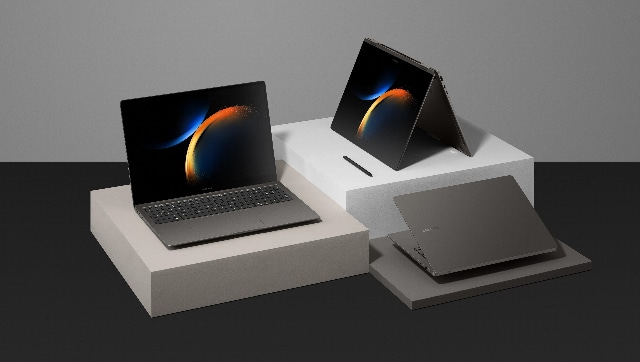
Dizo Watch 2 Review: You get a little more than what you pay for

Realme’s sub-brand Dizo has been quite busy launching new products in the audio and fitness category since its inception earlier this year. While most of its initial products were rebranded Realme units, some of the recent releases have been unique to the brand. One such product being the Dizo Watch 2. At first glance it may seem like a Realme Watch 2, but it isn’t. So, let’s see what’s special about it and what isn’t.

What I liked about the Dizo Watch 2

Extremely affordable

Let me get the pricing out of the way right at the start so that the things to follow can be seen in the right light. The Dizo Watch 2 can be purchased for Rs 2,499 with a one-year warranty. At times, it can even be spotted for another Rs 500 less in online sales. Despite being an entry-level fitness watch, the pricing is extremely attractive for what it offers. It can easily woo those new to fitness wearables and looking for a fitness band to get a taste of this domain.

Good build quality and comfortable to wear

It has a standard rectangular design that’s quite generic, but the build quality and finish are what make it look a little more premium than it actually is. Interestingly, the company has opted for a zinc alloy frame instead of plastic in this budget. That lends a bit of sturdiness to the construction but takes the weight a shade over 50 grams with straps, which though not the lightest around, isn’t too heavy either. The watch is 5ATM water resistant and you can dive into the pool wearing it.

The watch weighs in at a little over 50 grams; silicone straps feel comfortable around the wrist. Image: Tech2/Ameya Dalvi

While the black variant has a matte finish along the periphery, the other coloured options have a coat of gloss that attracts a few smudge marks. The silicone straps feel comfortable around the wrist, and there was no skin irritation despite wearing it throughout the day. The straps have a standard 22 mm width, and you can replace them with any third-party straps of the same width.

Surprisingly good display for the segment

The Dizo Watch 2 has a 1.69-inch touchscreen display, the resolution of which hasn’t been specified. Our queries on the same were met with silence. Though it is a normal TFT-LCD display, the colour reproduction is good, and so is the sharpness. In fact, it is surprisingly good for an entry-level watch with more than decent pixel density. Hence, I was surprised that the company chose to keep the resolution figures under wraps.

The 1.69-inch touchscreen is protected against scratches by a 2.5D glass that blends nicely into the metallic rim. Image: Tech2/Ameya Dalvi

The screen is protected against scratches by a 2.5D glass that blends nicely into the metallic rim. It has five levels of brightness of which level three is bright enough when indoors. You need to bump it up to level four or five under bright sunlight. You either need to flick your wrist or press the solitary physical button on the right to turn on the display. Flick to wake is slow to respond, with two seconds being the fastest response time. This is one aspect of the display I did not like, and will circle back in the latter half of the review.

Simple UI and uncomplicated Dizo app

The watch UI is straight out of Realme’s playbook and simple enough even for a first-time user to grasp. You just need to remember four basic gestures – swipe down for notifications, swipe up for apps library, swipe right for access to quick settings and left to see a handful of widgets like daily activity progress, heart rate, sleep info, weather updates, music playback etc. Inside a menu, swiping right takes you to the previous screen. The physical button can either be used to turn the screen on or off or jump to the home screen from anywhere.

You can opt for either a grid of small icons or a list for all the functions of the watch in the app drawer. The UI is snappy and lag-free. The transition effects are kept to minimum, but they are present, unlike in case of the Redmi Watch. You cannot install any additional apps, which is pretty much the case with all watches in this price range.

Dizo has moved away from the Realme Link app and now has its own companion app called Dizo App. It is as simple and basic as they come. Other than certain settings of the watch and access to watch faces, you get five tiles that display the activity progress of the day (steps, distance, calories burned), latest workout data, sleep data, heart rate and last checked SpO2 level. You can tap on either of those tiles for some more information, but do not expect detailed reports. I wouldn’t want to judge the capabilities of the app based on this watch given its limited features.

The watch UI is simple enough for first-time users, snappy and lag-free. Image: Tech2/Ameya Dalvi

Basic fitness features generally work as expected

The Dizo Watch 2 sets realistic expectations and doesn’t promise the world, which is good. It claims to monitor 15 different fitness activities ranging from walking, running, cycling, freestyle workouts, strength training, elliptical to popular sports like cricket, basketball, badminton, football and a few more. The watch has a PPG heart rate sensor capable of all-day heart rate monitoring, but the frequency of monitoring isn’t mentioned, nor could I find an option to change it.

The walks and runs are tracked accurately with less than five percent margin of error, which is quite good for a watch without GPS. Also, it errs on the conservative side, meaning it slightly under-reports the distance covered. The watch can also track your sleep, and while it works well, the tracking is elementary. All you get is the quantum of deep sleep, light sleep and awake time, no REM periods either. Stress monitoring isn’t available here, but again, we are talking about a sub-Rs 2,500 fitness watch. Menstrual tracking is available, though.

More details of your fitness activities are available in the companion app. In addition to that, you also get reminders to drink water or move around if you have been stationary for too long. Beyond fitness, you get the usual bunch of features like music controls, remote camera shutter and call alerts (silence or reject call). You also get notifications from your phone, and the messages are perfectly legible on the watch’s screen; however, you cannot reply to them.

Good battery life

Dizo claims that the Watch 2 can last 10 days on a full charge, and the estimate is spot on. I managed to get close to 10 days out of it with screen brightness set to three, notifications limited to SMS and email, 30 minutes of daily fitness activity, two oximeter readings per day and three nights of sleep tracking during the period. That is impressive battery backup. Even if you wear it to bed daily, it may drop to eight days at most, which is perfectly acceptable.

What I did not like about the Dizo Watch 2

Oximeter reading are not reliable

As with most fitness watches these days, the Dizo Watch 2 is equipped with an SpO2 sensor, however the readings aren’t accurate. It would often give me blood oxygen readings in the 92 to 94 range, when a clinical oximeter would suggest that it’s around 98-99. No points for guessing which device I would trust more. I am not sure if it’s an issue with my unit, but it is always advisable not to take SpO2 sensors in budget watches too seriously.

No A-GPS, pedometer registers false steps

Strangely, this watch has indoor and outdoor options for running, and I wonder why. This watch doesn’t have built-in GPS, nor was I expecting the feature at this price point. But it doesn’t even support assisted GPS (A-GPS) wherein the watch can use the GPS on the phone it is paired with. So, the tracking is the same irrespective of your location. Also, the pedometer tends to register false steps if you sit at one place and wave your hands or on a bumpy ride on a bike or in a car.

You either need to flick your wrist or press the solitary physical button on the right to turn on the display. Image: Tech2/Ameya Dalvi

Limited watch faces and just one slot on the watch

The company states that there are over 100 watch faces for the Dizo Watch 2. While you do have the usual mix of digital and analogue faces, along with some funky and creative ones, I did not find many options that appealed to me. But that’s a matter of individual taste. The bigger issue is you can only store one watch face of your choice on the watch. That is being excessively stingy. Yes, you can change the face from the app but that’s not the point.

Certain aspects of the watch could have been smarter

By now we have established that this is an entry-level watch, and while the number of features available here are more than acceptable for the segment, some could have been implemented smartly. For instance, the sedentary reminders pop up when the clock strikes an hour irrespective of whether you are stationary or active at the moment.

Also, when you are out for a walk or a run, the watch doesn’t alert you after mini milestones like completing a kilometre. The delay of a couple of seconds between flicking the wrist and the screen waking up (that I mentioned earlier) can be disconcerting. Hope the company fixes these in the next firmware update.

Final words

All said and done, the Dizo Watch 2 is a good budget fitness watch for those looking for basic features like steps count, heart rate monitor and notifications. A solid battery life and 5ATM water resistance are great to have. It does have a few shortcomings, but some of them can be overlooked given its modest pricing. It can be a good alternative for fitness bands as the pricing is similar, but you get a bigger screen and better battery backup here.

Rating: 3.5/5

Price: Rs 2,499


from Firstpost Tech Latest News https://ift.tt/3rq7gJQ